

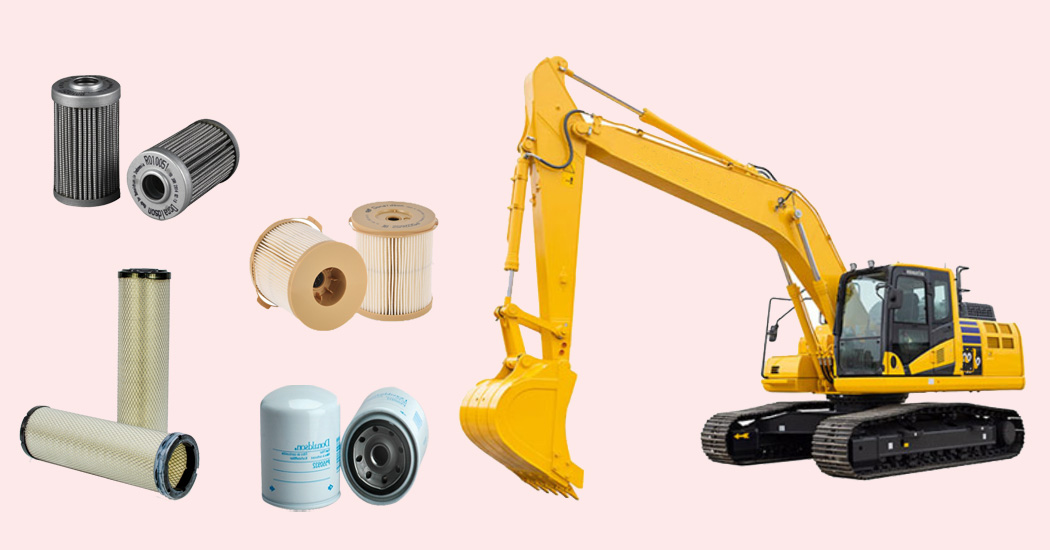
Excavator Filter
Excavators operate like steel giants in extreme environments, where dust, metal shavings, moisture, and various contaminants constantly threaten their intricate and costly internal components. Filters serve as the first and most crucial line of defense for these giants. Proper use and regular maintenance of filters are not only the cornerstone of ensuring normal machine operation but also key to reducing repair costs and extending equipment lifespan.
We provides a detailed analysis of the five primary filters found in excavators: air filter element, oil filter element, return oil filter, diesel fuel filter, and breather filter.
1.Air Filter Element—The Engine’s “Gas Mask”
The air filter serves as the engine’s intake gateway, filtering out hard particles like dust and sand from the incoming air. If the air filter fails, these contaminants enter the cylinders directly, mixing with engine oil to form an abrasive paste. This drastically accelerates wear on pistons, cylinder liners, and valve assemblies, leading to reduced engine.
Usage Instructions
- Regular Cleaning: In dusty environments, inspect and clean the outer filter every 8-10 hours of operation. Use a dry soft-bristle brush or compressed air (pressure below 0.5MPa) to blow dust from the inside out and top to bottom. Never wash with water or oil.
- Mandatory replacement: Even without the indicator lighting up, replacement is recommended every 500 operating hours or 6 months under normal conditions; shorten the interval under harsh conditions.
2.Oil Filter Element—The Engine’s “Kidneys”
During circulation, engine oil carries metal particles, carbon deposits, sludge, and gummy residues generated by friction. The oil filter’s role is to trap these contaminants, maintaining oil cleanliness and lubrication performance. An efficient oil filter significantly reduces internal engine wear, prevents oil passage blockages, ensures robust engine power, and extends overhaul intervals.
Usage Instructions
- Pre-Fill with Oil: Before installing a new filter, apply a thin layer of fresh oil to its sealing ring and fill the filter housing approximately two-thirds full with new oil. This facilitates rapid oil pressure establishment upon startup, minimizing dry grinding.
- Maintenance and Replacement: Strictly follow the excavator maintenance manual specifications, typically every 500 operating hours or in sync with oil change intervals.
3.Diesel Fuel Filter – The Fuel System’s “Cleaner”
Diesel fuel inevitably contains water, gum, and minute impurities. The diesel filter removes these contaminants, protecting the high-pressure fuel pump and extremely precise injectors. If injectors wear out or seize due to impurities, it leads to engine weakness, black smoke, increased fuel consumption, and difficult starting.
Usage Instructions
- Regular Water Drainage: Most diesel filters feature a drain valve at the bottom. Before each work shift or at regular intervals, open the valve to discharge accumulated water and impurities until clear diesel flows out.
- Maintenance and Replacement: The replacement interval is generally every 500-1000 operating hours, but it is strongly recommended to adjust this based on fuel quality. If the quality of the diesel fuel is inconsistent, replace the filter earlier.
4.Return Oil Filter & Pilot Filter—The “Purification Center” of the Hydraulic System
Installed on the hydraulic oil return line to the tank, it filters wear particles and seal debris generated during operation, maintaining system cleanliness. It directly protects hydraulic pumps, motors, and control valves from scoring and sticking.
Usage Instructions
- Simultaneous Replacement: Return line filters and pilot filters are typically replaced simultaneously with the hydraulic oil.
- Maintenance and Replacement: Strictly follow the equipment manual. Replacement is usually required every 2000 hours or when changing the hydraulic oil. Replacing the filter element is essential after any hydraulic system maintenance.
5. Breather Filter Element—The “Nose Hair” of the Oil Tank
Pressure within hydraulic and transmission reservoirs fluctuates with oil temperature, requiring external pressure equalization via the breather valve. The breather filter prevents moisture and dust from entering the reservoir during this “breathing” process. It effectively prevents emulsification and degradation of hydraulic and transmission fluids, protecting internal system components from rust.
Usage Instructions
- Regular Inspection: This filter is often overlooked. Check it periodically for clogging, as blockages can cause abnormal tank pressure and damage seals.
- Scheduled Replacement: Replace at least once every 1,000 operating hours or annually. Increase frequency in dusty or humid environments.
Though filters represent a small cost in the overall machine, they serve as the “guardian angels” for excavator health. Every penny saved on filters may come back tenfold or a hundredfold in future major failures like engine overhauls or hydraulic system breakdowns.
Treat your excavator well by caring for these unsung heroes—the filters. They will repay you with higher uptime, lower operating costs, and extended equipment life.