

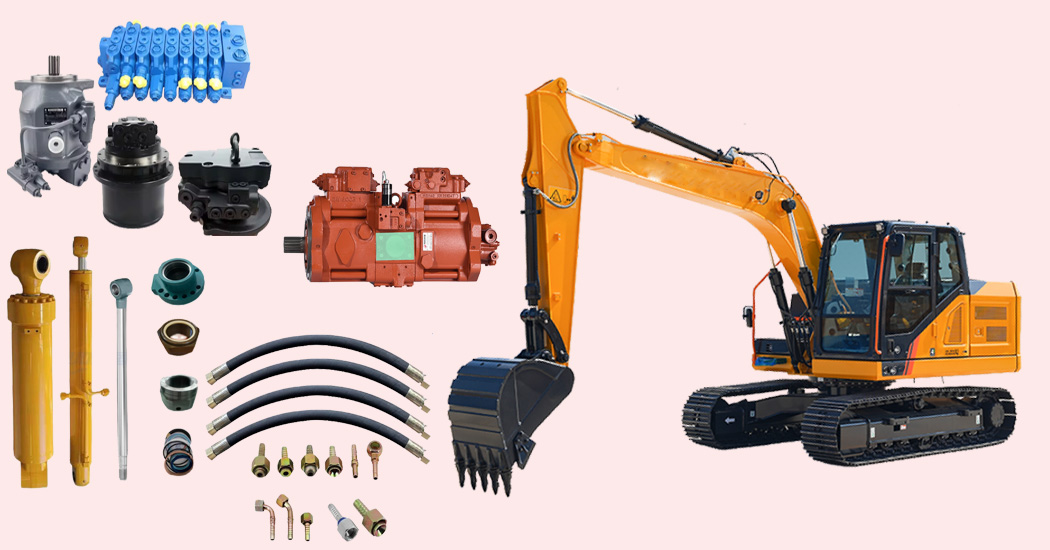
Excavator Hydraulic device
Excavators serve as the “steel giant arms” of modern engineering, and the source of their immense power and precise control lies in their sophisticated hydraulic systems. A hydraulic system failure not only incurs high repair costs but can also halt entire projects. Therefore, gaining a thorough understanding of the usage and maintenance methods for its core components is essential for every equipment manager and operator.
Focuses on the four core components—hydraulic pumps, hydraulic motors, hydraulic cylinders, and hydraulic valves—providing a practical maintenance guide.
1.Hydraulic Pumps: The “Heart” of the System
Hydraulic pumps serve as the power source of the hydraulic system, continuously pumping hydraulic fluid throughout the system like a heart.
After starting the engine, idle for 3-5 minutes—especially in cold conditions—to allow the pump to warm up. Never start under load with sudden acceleration.
Core Maintenance Principles
- Hydraulic fluid is critical: Strictly use specified grade and cleanliness levels of hydraulic oil. Contamination is the primary cause of pump wear.
- Regular Filter Replacement: Replace suction and return filters strictly according to the maintenance manual’s specified intervals or operating hours. Never compromise on replacement schedules.
2.Hydraulic Cylinders: The “Muscle” of Actuators
Cylinders convert hydraulic energy into linear motion, directly driving the boom, stick, and bucket.
Prevent the cylinder from sustaining heavy impact forces when fully extended or retracted, as this severely damages end caps and buffer mechanisms.
Ensure the cylinder is subjected to balanced forces. Off-center loading causes uneven wear on the cylinder barrel and piston, damaging seals.
Core Maintenance Principles
- Preventative Seal Replacement: After a certain operating cycle (e.g., during major maintenance), replace all cylinder seals even if no leaks are present to prevent future issues.
- Monitor Buffering Performance: Increased impact noise at the end of the cylinder stroke may indicate failed buffering devices, requiring immediate inspection and repair.
3.Hydraulic Motors: The Rotating “Joints”
Hydraulic motors (rotation motors, travel motors) drive platform rotation and machine movement.
1.Swing Motors: Avoid sudden braking during rotation or emergency stops on slopes. Significant inertial forces can impact internal components (e.g., distributor plates, pistons).
2.Travel Motors: Disengage platform locks before travel to prevent loaded starts. Operate at low speeds on rough terrain to minimize impact on motors and gearboxes.
Core Maintenance Principles
- Regularly Replace Gear Oil: For integrated reduction mechanisms in travel and slewing motors, regularly replace with specified gear oil. This is the most overlooked yet critical maintenance point.
- Check for Leaks: Inspect the motor housing (drain port) for oil leakage, which typically indicates internal seal damage.
4.Hydraulic Valves: The Precision “Nervous System”
Hydraulic valves (primarily main control valves and directional control valves) regulate fluid direction, pressure, and flow, making them the most intricate components in the system.
1.Smooth Joystick Operation: Gentle, steady control reduces hydraulic shock to spools and seats, preserving precision.
2. Monitor Pilot Circuits: Heavy or sluggish handle response may indicate insufficient pilot pressure or clogged pilot filters.
Core Maintenance Principles
- Hydraulic oil cleanliness is critical: The clearance between spool and sleeve is extremely tight; even minute contaminants can cause sticking, internal leakage, or malfunction. This is the sole core maintenance requirement for hydraulic valves.
- Regularly clean or replace the pilot filter element: The pilot system demands higher oil cleanliness standards. Strictly adhere to maintenance intervals for replacing the pilot filter element.
Caring for your excavator’s hydraulic system is caring for your investment. By adhering to the sixteen-word principle—“Smooth operation, cleanliness, regular maintenance, timely repairs”—and diligently protecting core components like hydraulic pumps, motors, cylinders, and valves, your “steel partner” will reward every ounce of your effort with higher efficiency, extended service life, and reduced failure rates.