

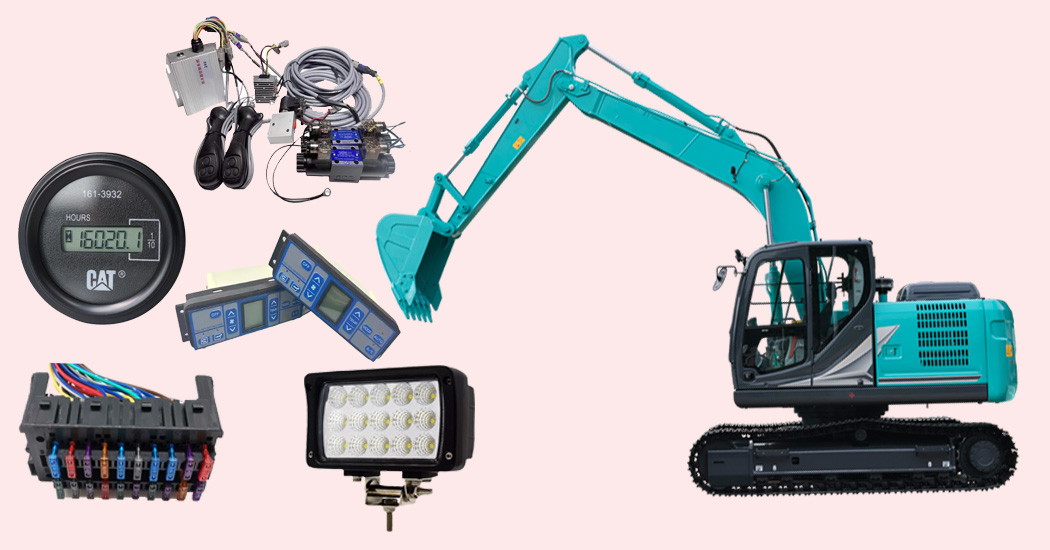
Excavator Electronic Device
Modern excavators are no longer mere mechanical hydraulic products but highly integrated intelligent machines. Their exceptional performance and efficiency largely depend on sophisticated electronic control systems.
Pressure sensors, position sensors, speed sensors, temperature sensors, and solenoid valves function as the excavator’s “nerve endings” and “muscle fibers,” playing a critical role.
Proper usage and meticulous maintenance are key to ensuring stable operation, extending service life, and avoiding costly repairs.
1. Pressure Sensors: The “Tactile Sense” Perceiving Force
Pressure sensors primarily monitor pressure values in hydraulic, fuel, and engine oil systems, serving as the core input source for the control system.
Main pump pressure varies across different modes (e.g., heavy-duty vs. standard). Avoid forcing heavy-duty operations in light-duty modes, as this causes abnormal system pressure and may damage the sensor.
Maintenance Guidelines
- Regularly inspect threaded seals: Pressure sensors are installed in hydraulic lines via threaded connections. Periodically check these interfaces for oil seepage or leaks. Replace seals immediately if detected.
- Keep connectors clean and dry: When plugging/unplugging electrical connectors, ensure both the interface and hands are clean to prevent moisture or oil contamination, which can cause poor contact or short circuits.
2.Position/Angle Sensors: The “Navigation” for Precise Motion
Position sensors (often angle sensors) are typically mounted on the pins of the boom, stick, and bucket. They provide position feedback for each component, forming the foundation for precise control and leveling functions.
Minimize massive inertial shocks when the bucket or boom reaches mechanical limits during operation, as these can damage the sensor’s internal precision components.
Maintenance Guidelines
- Regular Calibration: This is central to maintaining position sensors. Prolonged use may cause slight deviations, leading to imprecise movements. Calibrate zero points and ranges using dedicated procedures or methods according to the equipment manual’s schedule.
- Inspect Mounting Bolts:Ensure mounting bolts are secure. Loose bolts cause inaccurate angle detection and significantly reduce operational precision.
3.Speed Sensors: The “Pulse” Monitoring Rhythm
Speed sensors primarily include engine RPM sensors and travel speed sensors, used to monitor the rotational speed of core components.
Monitor Engine Vibration: Abnormal, intense engine vibration may damage nearby RPM sensors.
Maintenance Guideline
- Check wiring harness fastenings: Areas near the engine and travel motors experience high vibration and temperatures. Ensure sensor wiring harnesses are securely fastened to prevent breakage from wear.
4.Temperature Sensors: The “Thermometer” for Overheating Alerts
Temperature sensors monitor engine coolant temperature, hydraulic oil temperature, and other critical parameters, serving as the first line of defense against equipment overheating damage.
Strictly Avoid High-Temperature Operation:When the monitor alerts to excessively high water or oil temperatures, immediately shut down the engine and idle to cool down while investigating the cause. Continuing forced operation will burn out the sensor and may lead to severe consequences like engine cylinder scoring or hydraulic pump failure.
Maintenance Guideline
- Use Genuine Antifreeze and Hydraulic Fluid: High-quality coolant and hydraulic fluid offer superior thermal stability and heat transfer properties, effectively protecting the entire system.
- Perform Regular Calibration: If temperature readings appear inaccurate, cross-check using tools like infrared thermometers. Replace sensors promptly if significant deviations are detected.
5.Solenoid Valves/Proportional Solenoid Valves: The “Muscle” Executing Commands
Solenoid valves receive electrical signals from controllers, driving spool movement to control hydraulic oil flow direction and volume. They serve as the final actuators in electro-hydraulic systems.
Avoid Voltage Fluctuations: Unstable power supply voltage can shock the solenoid valve coil and even cause burnout.
Maintenance Guideline
- Check coil resistance: When the solenoid valve fails to operate, use a multimeter to measure coil resistance and determine if an open circuit or short circuit has occurred.
- Maintain secure connectors: Ensure the solenoid valve’s plug connections are firmly secured; loose connections can cause unstable operation.
Excavators have become highly electronic and intelligent. These electronic components collectively form a complex closed-loop control system, transforming excavators from purely mechanical hydraulic equipment into energy-efficient, high-performance, precise, reliable, and easily manageable smart construction machinery.
By cultivating good operating habits and establishing a scientific preventive maintenance plan, you can significantly reduce failure rates, keep your excavator in peak condition, and maximize its value for you.